MA/MFA Creative Practice - Dramatic Writing
Validated by the University of East Anglia
Application Deadline: Jul 24 2026 at 9:00AM
2026/27 Course Fees
Interview fee : £20UK/ROI students (Year 1) : £13,600
UK/ROI students (MFA Year 2) : £10,850
International students (Year 1) : £19,830
International students (MFA Year 2) : £10,850
Explore the course:
Course Overview
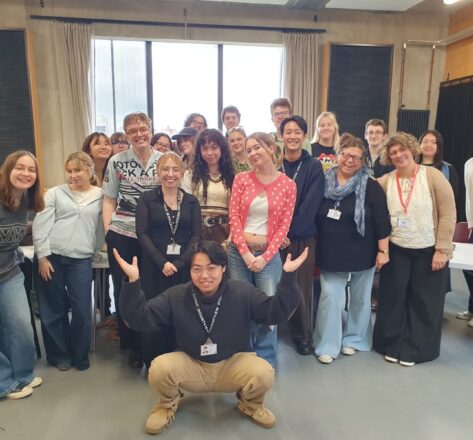
Mountview is currently the only UK drama school to offer Directing, Dramatic Writing and Producing as three distinct, specialised pathways within a single, unified Creative Practice MA framework. The course is designed for multi-hyphenate practitioners who are excited by collaboration and meeting the demands of the twenty-first century creative industries.
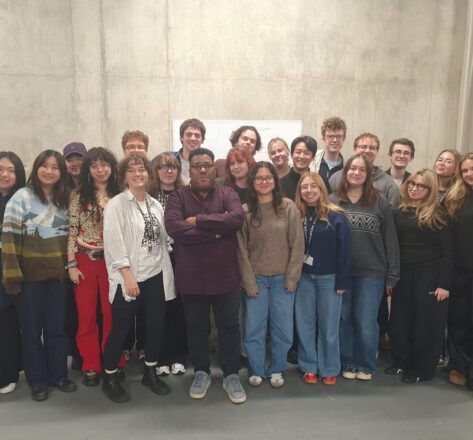
By bringing directors, writers and producers into one ecosystem, the course mirrors the professional world by fostering creative partnerships through shared engagement with modes of collaboration, creative enterprise, dramatic structures and critical contexts.
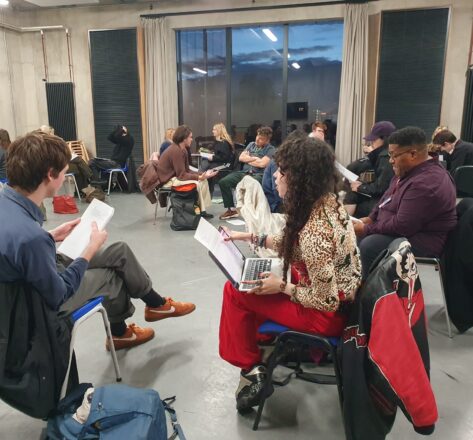
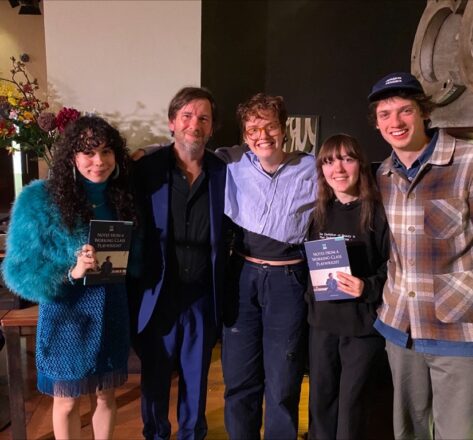
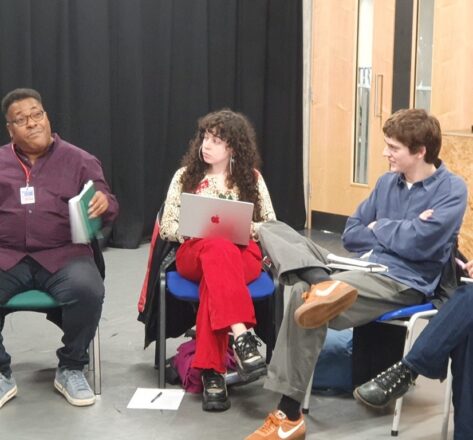
Students on the Dramatic Writing pathway develop an in-depth knowledge of dramatic structures and the core competencies for writing across different forms and styles. The course develops an understanding and critical awareness of current practice through engagement with industry practitioners and academics. You will be mentored by award-winning playwright Roy Williams OBE (Death of England National Theatre, Sucker Punch Royal Court), who oversees aspects of the course as Distinguished Visiting Artist.
The course concludes with the opportunity to put your learning into practice through the staging of a public facing, fully-realised festival of new work. VIEW Festival allows students to develop their pathway specific skills while also collaborating closely with the Producing, Directing and Performance students.
Our MA Creative Practice graduates leave with an established network of industry contacts and prepared for high-impact careers as Playwrights, Screenwriters, Dramaturgs, Directors, Creative Leaders, Theatre Makers, Artistic Directors, Commercial and Independent Producers and Venue Leaders.
Experience the incredible work of our current cohort at VIEW Festival – find out more here.
This is a full-time course, requiring a commitment of five days per week, over three terms in the first year. All modules are compulsory. Learning and teaching modes include:
- Tutorials
- Seminars
- Workshops
- Work-based learning
- Independent study
This course of study culminates in a public facing postgraduate festival of new work.
The Creative Practice teaching team is led by Hamish Pirie and Dawn Ingleson as Joint Course Leaders, alongside Roy Williams as Distinguished Visiting Artist. Dawn worked extensively at the National Theatre as a creative producer and has also taught at LSBU, while Hamish’s directing credits include work at the Royal Court, Donmar Warehouse, Paines Plough and Traverse Theatre. Roy is a multi-award winning writer whose credits include Death of England: The Plays (National Theatre), The Lonely Londoners (Kiln and Jermyn Street Theatre) and Sucker Punch (Royal Court, Olivier Award nomination).
In addition to working alongside the core teaching team, MA Creative Practice students also benefit from industry masterclasses specific to their pathway, led by the world’s most prestigious creative powerhouses. Recent MA Creative Practice sessions have featured:
- Morgan Lloyd Malcolm Olivier Award-winning writer of Emilia (Shakespeare’s Globe, West End); writer/creator of Obsession (Netflix)
- Sami Ibrahim Award-winning writer of Two Palestinians Go Dogging (Royal Court)
- Leo Butler Living (Sheffield Theatres); former Playwriting Tutor for the Royal Court Theatre’s Young Writers’ Programme
- Yasmin Joseph Writer of J’Ouvert (James Tait Black Prize winner) and A Thousand Blows (Hulu/Disney+)
- Emma Dennis Edwards Writer of NOT YOUR SUPERWOMAN (Bush Theatre); Consent (Channel 4)
- Deborah Pearson Writer of The Talent (Battersea Arts Centre)
- Sean Holmes Associate Artistic Director of Shakespeare’s Globe; former Artistic Director of the Lyric Hammersmith
- Denzel Westley-Sanderson Winner of the RTST Sir Peter Hall Directing Award
- Ned Bennett The Curious Incident of the Dog in the Night-Time (Birmingham Rep)
- Ola Ince Director of Tina: The Tina Turner Musical (International Associate Director, London/Hamburg/Broadway/Utrecht) and Appropriate (Donmar)
- Lucy Morrison Director of Hope Has A Happy Meal and This Is Not Who I Am (Royal Court)
- Emily Aboud Award-winning director, Tender and Lady Dealer (Bush Theatre)
- Victoria Leacock Producer of tick, tick….BOOM! (Broadway)
- Joseph Smith Producer of Come From Away (West End/Broadway) and Billy Elliot the Musical
- Sacha Milroy Joint CEO of Punchdrunk (The Burnt City); formerly Director of Producing at the National Theatre
- Helen Tovey Former Chief Executive of Unicorn Theatre
- Will Bridgeland Producer at Candoco Dance Company
- Katie Town Executive Director at Theatre Royal Wakefield
Course Content
Critical Contexts
Creative Enterprise
Structures of Dramatic Writing
Developing Professional Practice – Dramatic Writing
Foundations: Technique
Writing for Stage
Writing for Recorded & Interactive Media
Developing An Approach
Drafting Project
Professional Practice Portfolio
Collaboration
Postgraduate Festival
Reflexive Practitioner
The option to undertake an MFA is available through a second year of study. MFA modules are designed to deepen student knowledge and skills as a practitioner through pedagogy laboratories and independent practice and research. Building on skills and knowledge developed in the first year, year two of the MFA places an emphasis on independence and developing individual practice, teaching and learning. This second year can largely be undertaken as distance learning, with MFA students required to attend Mountview in person at specific scheduled moments, for teaching labs and the performing research event.
MFA Modules:
Advanced Praxis
Critical Pedagogies
Full Module Specifications document: MA-MFA Creative Practice (2025) – Module Specifications
Course Dates
2025/26 Term Dates
Autumn term 8 September – 12 December 2025
Spring term 5 January – 2 April 2026
Summer term 20 April – 10 August 2026
2026/27 Term Dates
Autumn term 7 September – 11 December 2026
Spring term 4 January – 25 March 2027
Summer term 12 April – 16 July 2027
Final Submission: 09 Aug 2027
SRA Deadline: 23 Aug 2027
Graduates
Amy Trigg – Writer, Reasons You Should(n’t) Love Me (Kiln, Winner of The Women’s Prize for Playwriting)
Will Close – Writer, Mediocre White Male (BBC Radio 4)
Anne Odeke – Writer, Princess Essex (Shakespeare’s Globe),
“This course has been a dream come true. I do not recognise the person I was at the start and I am so proud of who it has helped me to become. More confident in myself and my work. More open to making connections and friends. A better person.”
Molly May Gorman, MA Creative Practice Dramatic Writing student
“Learning as a creative cohort with directors and producers is what makes this course so unique and incredible. The connections I’ve formed with people from all over the world will stay with me for many years to come. It’s been so special to see my work brought to life with so much respect, sensitivity and kindness by my classmates, with the outstanding talent of the Mountview actors.”
Eddie Oliver, MA Creative Practice Dramatic Writing student
“The amount of resources that have been provided is astounding: tutorials, workshops, readings and, most importantly, people. I was taught by award-winning writers such as Leo Butler, Roy Williams, Stef Smith, Sami Ibrahim and Yasmin Joseph, over month-long periods, meeting weekly for hours at a time to pick their inspiring brains.”
Dillon Dowson, MA Creative Practice Dramatic Writing student
Entry Information
Admission onto the course is by interview. Applicants must be aged 21 years or over at the start of the course. Students who do not hold an undergraduate degree will need to undertake an access assignment to establish suitability for undertaking the MA.
If an applicant requires a student visa and their first language is not English, they will need to prove their knowledge of the English language before applying for their student visa. This must be demonstrated by passing a Secure English Language Test (SELT) from an approved provider or having a GCSE, A level, Scottish National Qualification level 4 or 5, Scottish Higher or Advanced Higher in English, gained through study at a UK school that they began when they were under 18.
Mountview welcomes applications from people with disabilities and is keen to support all applicants to achieve their best. If applicants have any special requirements or access needs, these should be discussed with the course leader/administrator.
Mountview is committed to a comprehensive policy of equal opportunities for students in which individuals are selected and treated on the basis of their relevant merits and abilities. No applicant will receive less or more favourable treatment on grounds of sex, gender, sexual orientation, age, ethnic origin, disability, religion and marital/parental status or any comparable grounds.
Upon offer, students must be sure that they are prepared to engage with a wide range of material that may challenge their personal ethical, religious, spiritual or moral beliefs, and present it in a wide range of settings.
Fees
| Interview fee | £20 |
| UK/ROI students (Year 1) | £13,600 |
| UK/ROI students (MFA Year 2) | £10,850 |
| International students (Year 1) | £19,830 |
| International students (MFA Year 2) | £10,850 |
All fees shown are for 2026/27 entry. Fees are subject to annual review. One term’s notice will be given of any increases.
Full terms and conditions relating to audition payments and refunds can be viewed here.
Funding and ScholarshipsInterview Information
You will be asked to submit a portfolio, further details of which you can find on the Auditions and Interviews link below. Following your portfolio submission, you will be notified by the Admissions team if you have been shortlisted for an interview with the course leader, which will be held at Mountview.
For international candidates and those with exceptional circumstances, the option of an online interview is available.
Please be aware that due to the limited amount of places available, this course may become full before June and in this event applications will close early. Please apply early to avoid disappointment.